The kick-off meeting marked the official operational launch of the PHYBIOMED project following the completion of initial administrative procedures and the progressive availability of national funding.
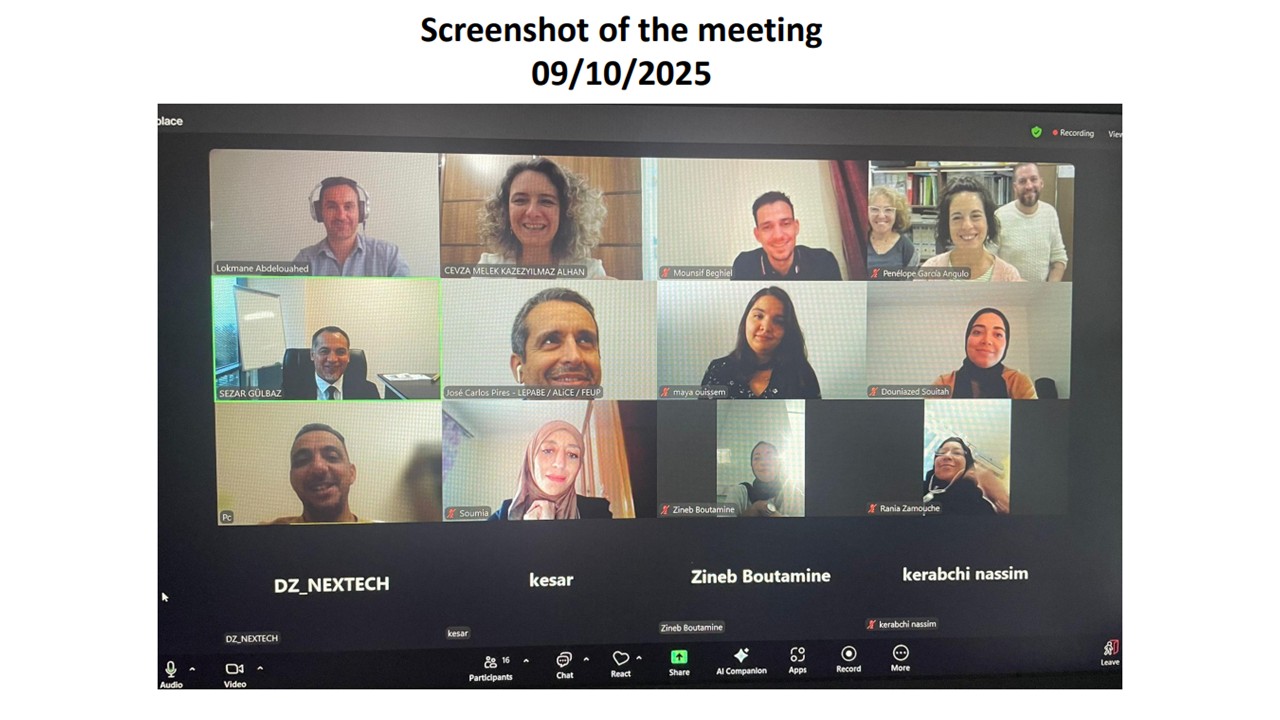
The PHYBIOMED consortium officially launched the project during its online Kick-off Meeting, bringing together partners from across the Mediterranean region. This first meeting provided an opportunity to present the project objectives, discuss the work plan and expected outcomes, and strengthen collaboration among consortium members. The discussions highlighted a shared commitment to developing innovative wastewater treatment, resource recovery, and sustainable water management solutions within the Water–Energy–Food Nexus framework.
Kick-off Meeting Report – PRIMA PHYBIOMED Project
1. General Information
Project title: PHYBIOMED
Funding programme: PRIMA
Meeting type: Kick-off Meeting
Date: 09 October 2025
Time: 15:00 (Paris time)
Format: Online (Zoom)
Coordinator: INSA Rouen Normandie - Dr. Lokmane Abdelouahed
Participants: Representatives of all consortium partners, including senior researchers, newly recruited PhD students, postdoctoral researchers, and Master’s interns.The kick-off meeting marked the official operational launch of the PHYBIOMED project following the completion of initial administrative procedures and the progressive availability of national funding.
2. Purpose and Objectives of the Kick-off Meeting
The main objectives of the kick-off meeting were to:
officially launch the PHYBIOMED project at consortium level,
ensure a shared understanding of the project’s scientific vision, objectives, and structure,
allow partners to present their planned activities and expected deliverables,
introduce newly recruited researchers involved in the project,
discuss communication, dissemination, and exploitation strategies,
address consortium management aspects, including the Consortium Agreement,
share feedback from the PRIMA programme meeting held in Barcelona (1–2 October 2025).
3. Reminder of Project Objectives and Overall VisionThe meeting started with a presentation by the project coordinator, recalling the overall vision and strategic objectives of PHYBIOMED.
The project aims to develop an integrated, sustainable, and circular approach to wastewater treatment and valorisation, combining:
- physicochemical pre-treatment processes,
- biological treatment using microalgae,
- anaerobic biodigestion and biogas production,
- energy recovery through cogeneration systems (CHP),
- CO₂ capture and reuse,
- production of biofertilisers and biostimulants,water accounting and governance tools.
A strong emphasis was placed on the circular economy concept, where wastewater, biomass, and residual streams are considered as valuable resources contributing to water reuse, renewable energy production, and sustainable agriculture.The coordinator also recalled the key project objectives, including:·
- the development of environmentally friendly wastewater treatment solutions,·
- the valorisation of sludge and biomass into biogas, biochar, and biofertilisers,·
- the coupling of water and energy systems,·
- the development of digital tools such as WatTool and the Decision Support Tool (DST),·
- the contribution of PHYBIOMED to PRIMA priorities and United Nations Sustainable Development Goals (SDGs).
4. Presentation of Work Packages and Planned Activities
Following the general presentation, each partner presented 1 to 2 slides summarising their planned activities and expected deliverables within their respective work packages.
WP1 – Physicochemical Pre-treatment of Wastewater
Partners involved in WP1 presented their strategy for improving wastewater biodegradability using advanced physicochemical processes, including photocatalysis, electrocoagulation, and bio-electrochemical treatments. The importance of wastewater characterisation and pre-treatment as a key step enabling downstream biological processes was highlighted.
WP2 – Microalgae Treatment and CO₂ CaptureThe WP2 presentation focused on microalgae cultivation using pre-treated effluents, nutrient removal, CO₂ capture, and biomass production. Planned pilot-scale experiments using photobioreactors and the integration with anaerobic digestion were discussed.
WP3 – Biodigestion Treatment and Sustainability AssessmentWP3 partners presented their approach for the anaerobic digestion of microalgal biomass and other organic residues to produce biogas. The importance of process optimisation, reactor configuration, and sustainability assessment was emphasised.
WP4 – Energy Production, Sustainability Assessment, and Tools
WP4 focused on modelling and optimisation activities related to energy production, CHP systems, CO₂ capture, and the development of digital tools. The objectives of WatTool and real-time optimisation frameworks were introduced.
WP5 – Fertilisation and BiostimulantsThe WP5 presentation introduced the development of innovative microalgae-based biofertilisers and biostimulants, including formulation strategies, application modelling, and environmental impact assessment.
WP6 – Water Accounting for Water Governance
WP6 partners presented the water accounting framework and governance tools, highlighting the use of models such as WEAP to support decision-making at basin and regional scales.
5. Presentation of Human Resources and New Team Members
Partners were invited to introduce PhD students, postdoctoral researchers, and interns already recruited or identified within the project.Several early-stage researchers presented short slides summarising their academic background, research objectives, and expected contributions to PHYBIOMED. This session was particularly valuable in:
- facilitating integration of young researchers into the consortium,
- clarifying links between individual research topics and work package objectives,strengthening collaboration between institutions.
- The consortium acknowledged that the mobilisation of human resources is a key element for PRIMA,
- demonstrating that project teams are effectively being established.
6. Communication, Dissemination, and Exploitation
A dedicated discussion was held on communication, dissemination, and exploitation activities.
Key points included:
- the development of a project website to present objectives, partners, and results,
- the use of social media and professional networks (e.g. LinkedIn) for project visibility,
- the preparation of scientific publications, conference presentations, and posters,
- the organisation of follow-up meetings every three months,the preparation of short internal progress reports to monitor project advancement.
Partners agreed on the importance of coordinated dissemination activities aligned with PRIMA requirements.
7. Consortium Agreement
The coordinator presented the status of the Consortium Agreement, outlining the main principles related to governance, intellectual property, data management, and partner responsibilities.Partners were invited to provide their feedback by 10 October 2025, in order to finalise and formally adopt the Consortium Agreement within the agreed timeline.
8. Feedback from the PRIMA Meeting (Barcelona, 1–2 October 2025)The coordinator provided feedback from the PRIMA meeting held in Barcelona. PRIMA representatives strongly emphasised the critical importance of deliverables, quality control, and timely submission.It was noted that partners were reminded that all deliverables will be reviewed by independent experts and that insufficient quality or delays could jeopardise funding.
9. Conclusions and Next StepsThe kick-off meeting successfully achieved its objectives, allowing the consortium to:align on the project vision and structure,confirm partner commitments,initiate scientific and technical activities,establish clear coordination and communication mechanisms.The consortium agreed on the next steps, including:finalisation of the Consortium Agreement,continuation of recruitment and equipment procurement,launch of experimental and modelling activities,preparation of upcoming deliverables and milestones.The meeting concluded with a strong collective commitment to the successful implementation of the PHYBIOMED project.