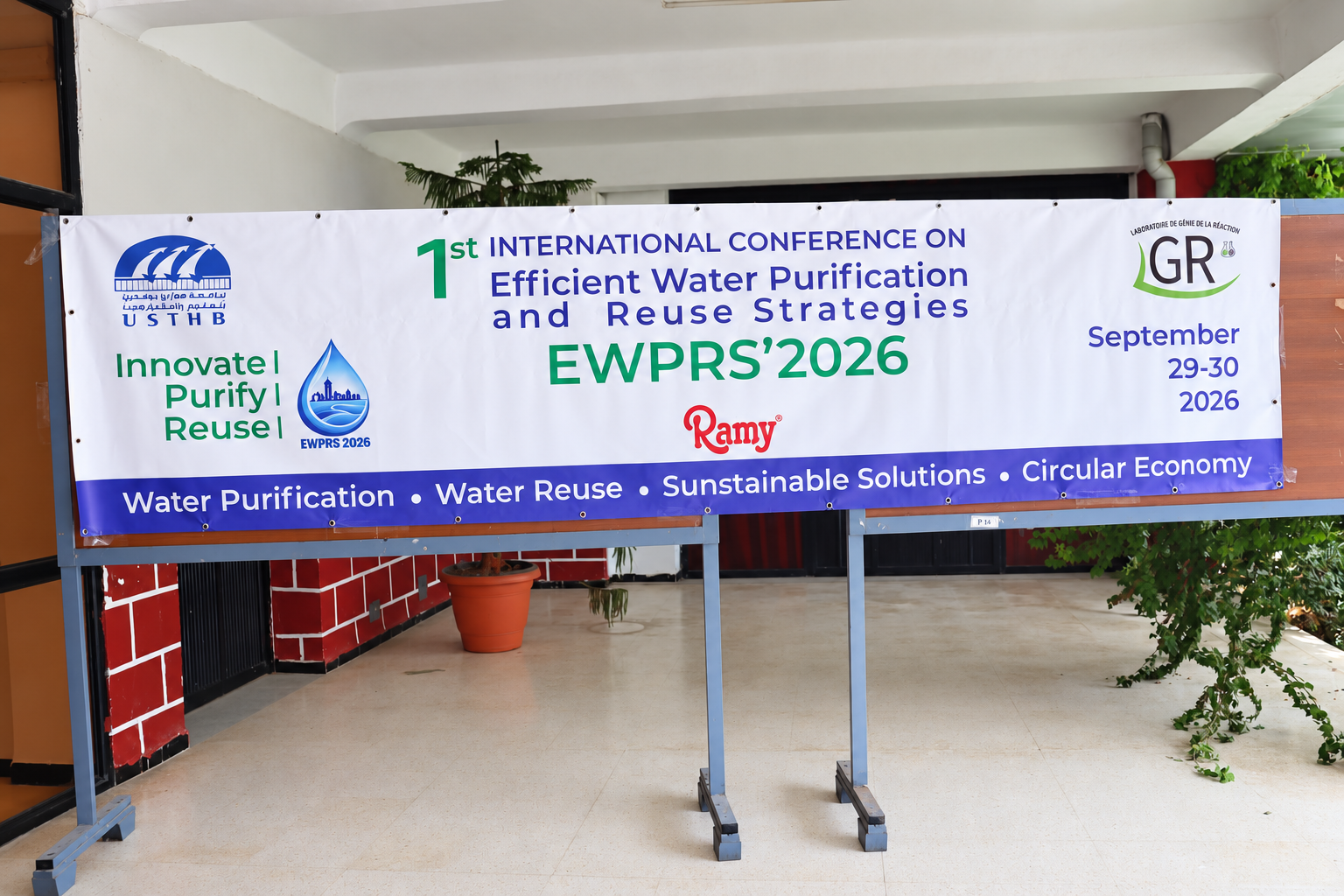
Two researchers from Salah Boubnider University Constantine 3 (UC3), Algeria, a partner institution of the PHYBIOMED project, participated in the 1st International Conference on Efficient Water Purification and Reuse Strategies – EWPRS’2026, held at USTHB, Algiers, Algeria, on 29–30 September 2026.
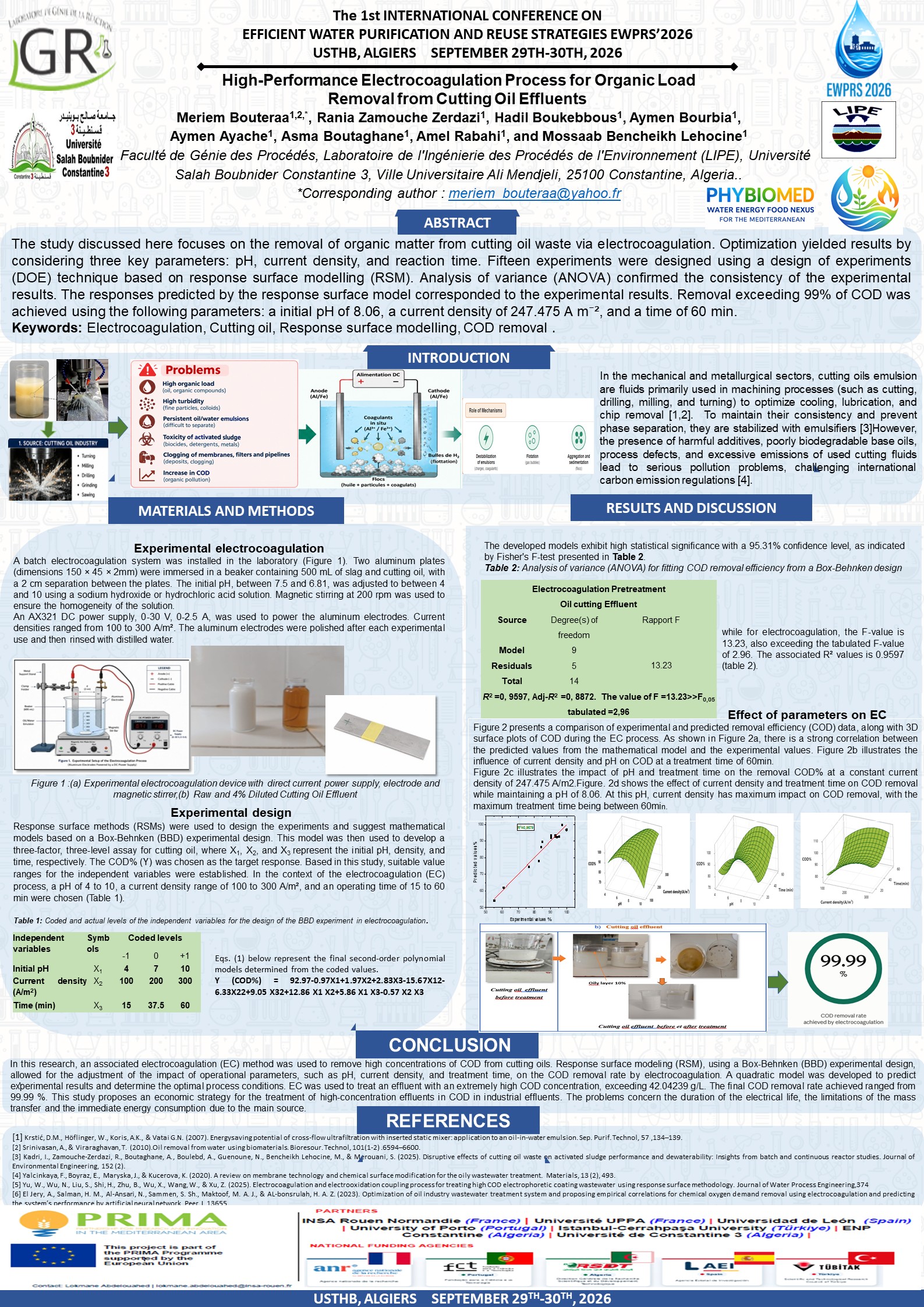
Dr Meriem BOUTERAA and Dr Rania Zamouche, from the Laboratory of Process Engineering for the Environment (LIPE), Faculty of Process Engineering, Salah Boubnider University Constantine 3, presented research addressing the treatment of highly polluted industrial wastewater by electrocoagulation.
“High-Performance Electrocoagulation Process for Organic Load Removal from Cutting Oil Effluents”
The presented work investigates the treatment of cutting-oil effluents, a particularly challenging industrial wastewater stream due to its high organic load, stable oil-water emulsions and complex pollutant composition.
The study focused on the application of an electrocoagulation process using aluminium electrodes to remove organic matter, evaluated through Chemical Oxygen Demand (COD).
A Response Surface Methodology (RSM) approach based on a Box–Behnken experimental design was used to investigate and optimize three key operating parameters: initial pH, current density and treatment time.
The optimization demonstrated the high performance of the proposed process, with COD removal exceeding 99% under optimized operating conditions.
These results highlight the potential of electrocoagulation as an efficient pretreatment and treatment technology for industrial effluents characterized by high organic loads.
Connection with PHYBIOMED
This research is closely connected to the scientific objectives of the PHYBIOMED project, particularly its activities dedicated to wastewater pretreatment, pollutant removal and the development of integrated treatment strategies.
Industrial effluents such as cutting-oil wastewater can contain high concentrations of organic compounds, emulsified oils and other contaminants that may significantly limit the efficiency of subsequent biological treatment processes.
Electrocoagulation therefore represents a promising pretreatment step, capable of substantially reducing the initial pollutant load and improving wastewater characteristics before subsequent biological, physicochemical or advanced treatment stages.
The work presented by Dr Meriem BOUTERAA and Dr Rania Zamouche contributes to the broader PHYBIOMED approach of combining complementary treatment technologies to support:
- efficient wastewater treatment and pretreatment;
- reduction of persistent and complex pollutants;
- improved performance of downstream biological processes;
- water reuse and circular water management;
- sustainable management of water resources in Mediterranean regions.
Their participation in EWPRS’2026 also contributed to the dissemination of PHYBIOMED-related research and to scientific exchanges on emerging technologies for water purification and reuse.
Conference: 1st International Conference on Efficient Water Purification and Reuse Strategies – EWPRS’2026
Date: 29–30 September 2026
Location: USTHB, Algiers, Algeria
PHYBIOMED partner: Salah Boubnider University Constantine 3, Algeria
Participants: Dr Meriem BOUTERAA and Dr Rania Zamouche
Presentation: High-Performance Electrocoagulation Process for Organic Load Removal from Cutting Oil Effluents
Keywords: Electrocoagulation, industrial wastewater, cutting oil, COD removal, wastewater pretreatment, water reuse, PHYBIOMED, UC3